


A louder exhaust, rattling underneath the car, fumes in the cabin or visible damage can all point to an exhaust problem. A failed joint or mounting may need a small repair, while a badly corroded pipe or damaged silencer may need replacing. The condition of the affected part and the surrounding system determines the best option.
Fumes inside the car or an exhaust dragging on the road need immediate attention. Stop somewhere safe, switch off the engine and arrange assistance.
Signs your exhaust needs attention
Your exhaust carries gases away from the engine. Depending on the vehicle, the system includes pipes, flexible joints, emissions-control components and silencers that reduce noise. The tailpipe you can see at the back is only one part of it.
Changes in sound, smell or performance can help you spot a problem, but they cannot identify the failed part on their own.

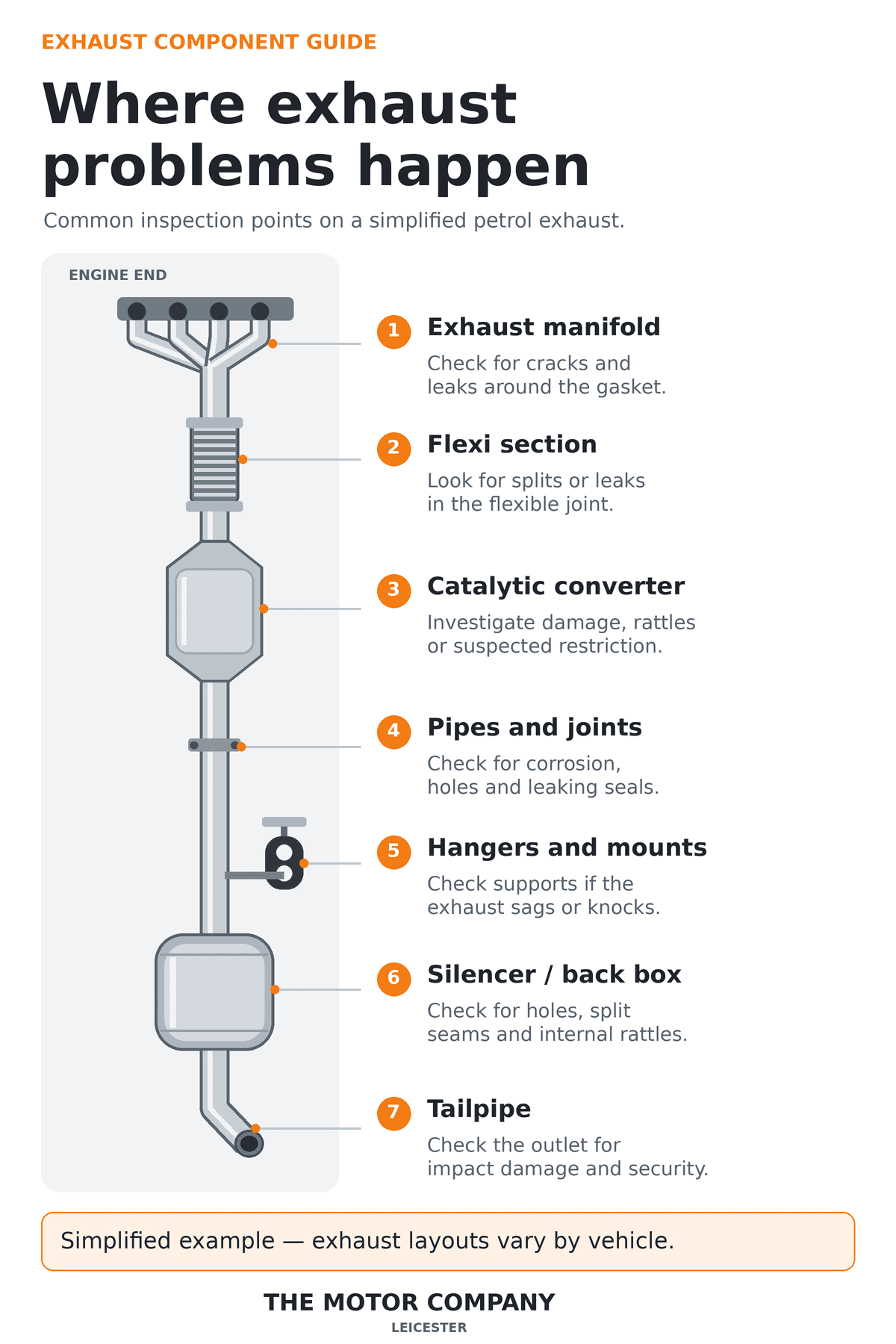
|
What you notice |
Possible causes |
What to do |
|---|---|---|
|
Roaring or blowing, especially when accelerating |
A leaking joint, split pipe or damaged silencer |
Arrange an inspection to locate the leak |
|
Ticking or hissing near the engine |
A leak around the exhaust manifold, gasket or front pipe |
Have it checked promptly; stop safely if fumes enter the cabin |
|
Rattling or banging underneath the car |
A loose heat shield, worn mounting or damaged internal silencer parts |
Ask a garage to check the mountings, clearances and components |
|
Exhaust fumes inside the car |
Gases entering the passenger compartment, potentially through an exhaust fault |
Stop safely, switch off the engine and arrange assistance |
|
A pipe or back box hanging unusually low |
Failed supports, a broken joint or corrosion |
If it is dragging or at risk of detaching, stop and arrange recovery |
|
Poor acceleration, increased fuel use or an engine warning light |
An exhaust restriction, sensor issue or another engine fault |
Arrange diagnosis before replacing parts |
Why is my exhaust louder when I accelerate?
More exhaust gas flows through the system as the engine works harder, which can make a leak more noticeable. A split flexi pipe, leaking connection or damaged silencer may produce a blowing or roaring sound.
A louder exhaust does not automatically mean the catalytic converter has failed. The location and type of noise help a technician decide what to inspect.
Does rust mean the exhaust needs replacing?
Surface rust alone does not tell you that a pipe needs replacing. Holes, splitting seams, flaking metal and weakened connections are more concerning, particularly if they are accompanied by blowing noises or soot marks around a joint.
A garage should assess the remaining metal as well as the visible fault. Sealing one hole may achieve little if the surrounding section is already deteriorating.
Can the exhaust be repaired, or does it need replacing?
A damaged exhaust does not automatically require a complete replacement. The repair depends on the fault, how much of the system is affected and which replacement sections are available for your vehicle.
|
What the inspection finds |
Possible approach |
What influences the decision |
|---|---|---|
|
Worn rubber hanger or loose connection |
Replace the support or repair the connection |
The pipe and attachment points must still be sound |
|
Leaking gasket or joint |
Replace the gasket, clamp or affected joint components |
Corrosion or distortion may prevent a reliable seal |
|
Localised pipe damage |
A suitable repair or replacement of the affected section |
Location, metal condition and access |
|
Split flexi pipe |
Replace the flexi section or the assembly containing it |
Vehicle design and availability of suitable parts |
|
Corroded back box or broken internal silencer parts |
Replace the silencer or associated assembly |
Condition of adjoining pipes and fittings |
|
Widespread corrosion or several failing sections |
Replace multiple sections or more of the system |
Durability, total labour and the condition of remaining parts |
|
Suspected catalytic-converter or sensor fault |
Diagnose the cause, then repair or replace the confirmed faulty component |
Symptoms and fault codes alone do not prove which part has failed |
These are possible outcomes following inspection, rather than a diagnosis for a particular car.

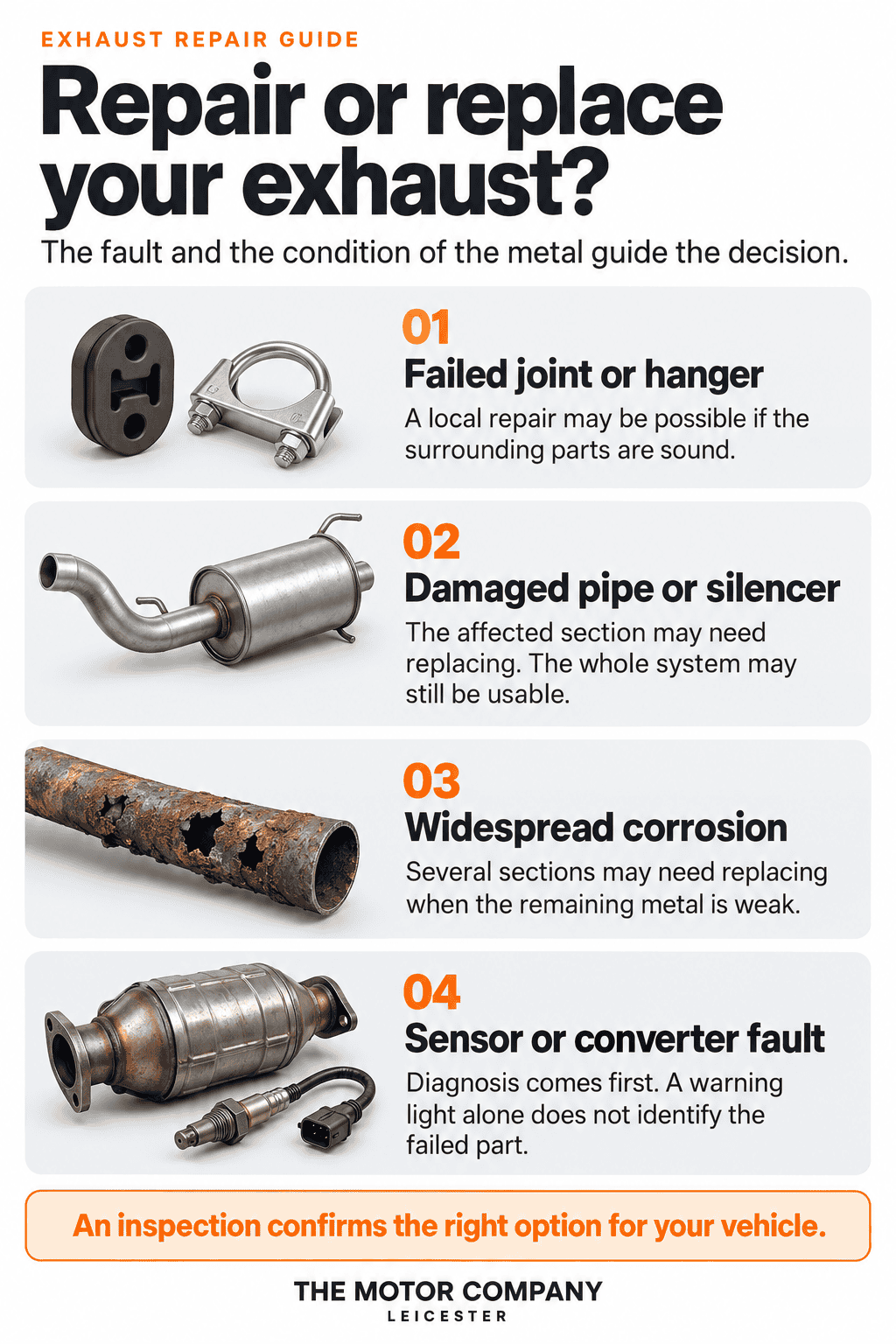
When is a repair worth considering?
A repair may be suitable when the problem is confined to a connection, mounting or small area of otherwise sound material. Welding may be an option for some damage, depending on the component, material and location.
Ask the garage what caused the problem and how durable the proposed repair is likely to be. A low initial price is less attractive if deterioration nearby is likely to lead to another repair soon.
When is replacement the better option?
Replacement is more likely when metal has corroded through, a silencer has failed internally or several parts are deteriorating. Replacing the affected section can provide a more dependable result than repeatedly patching weakened metal.
Before agreeing to a complete system replacement, ask which parts have failed and why the remaining sections also need changing. Some vehicles have larger integrated assemblies, so replacing a single fault may involve more than one component.
For help identifying the fault, see our exhaust repair and replacement service in Leicester.
Can you drive with a damaged exhaust?
The urgency depends on the fault. A minor rattle and fumes entering the passenger compartment present different risks, and sound alone cannot establish that a car is safe to drive.
Stop somewhere safe and arrange assistance if:
- Exhaust fumes enter the cabin.
- A pipe or silencer is dragging, visibly insecure or close to falling off.
- The car suddenly loses significant power or develops severe running problems.
For a new noise without these warning signs, contact a garage promptly and describe what has changed. Ask for advice before driving the car to an appointment. Opening the windows does not make an exhaust leak safe.
If you look for visible damage yourself, park safely, switch off the engine and allow the exhaust to cool. Do not crawl beneath a vehicle supported only by a jack, touch hot components or run the engine in an enclosed garage.
How does a garage diagnose an exhaust problem?
A useful inspection establishes where the fault is and what caused it. Depending on the symptoms, a technician may:
- Check when the problem occurs. Noise during a cold start, acceleration or driving over bumps can provide different clues.
- Inspect the system on a lift. Check pipes, joints, flexible sections, silencers, heat shields and supports for damage or corrosion.
- Locate leaks or unwanted movement. Assess connections and clearances, using suitable leak-testing methods where needed.
- Investigate warning lights or performance changes. Read fault codes and assess live data or carry out further tests when relevant.
- Explain the repair options. Identify the affected components and discuss the condition of the rest of the system.
A fault code mentioning an oxygen sensor does not necessarily mean that sensor needs replacing. Exhaust leaks, wiring faults and other engine problems can affect readings, so the cause needs checking first.
On diesel cars, a DPF problem can also affect performance. A diesel particulate filter traps soot; diagnosing a restriction is different from checking a leaking pipe. Read about our DPF cleaning service if your car has a DPF warning.
What affects exhaust repair and replacement costs?
The cost depends on the component and the work involved. Replacing a rubber mounting is a different job from replacing a catalytic converter or a large exhaust assembly.
The main factors are:
- Vehicle and engine: parts vary by model, fuel type and engine specification.
- Fault location: a rear silencer may be easier to access than a component near the engine.
- Extent of damage: one failed connection requires different work from widespread corrosion.
- Parts specification: original-equipment and suitable aftermarket options can differ in price.
- Fittings and labour: seized bolts, damaged studs and corroded connections can add work.
- Further diagnosis: warning lights or performance problems may require testing before a quote can be confirmed.
Ask what the quote includes, such as VAT, labour, fittings and any diagnostic charges. Check the warranty offered on the proposed parts and work.
Repair time also varies with access, corrosion and parts availability. Provide your registration number when enquiring so the garage can identify the vehicle and relevant components.
Can an exhaust problem cause an MOT failure?
Yes. The MOT checks exhaust security, leaks, noise and applicable emissions requirements.
Under the DVSA MOT inspection manual, a major exhaust leak or insecure exhaust is a major defect. Exhaust fumes entering the cabin are also a major defect, or a dangerous defect if they pose a danger to occupants’ health.
If your report mentions a major leak under 6.1.2(a), ask the garage to show you the affected area and explain the repair options. That wording does not, by itself, mean the whole exhaust needs replacing.
Excessive exhaust noise and emissions faults are covered by separate MOT checks. Surface rust alone does not automatically mean failure; the component’s condition and the resulting defect matter.
Find out more about MOT testing at The Motor Company.
Common questions about exhaust repairs
What is a blown exhaust?
A blown exhaust usually means a leak or break in the system. You may hear a blowing, rumbling or roaring sound, particularly during acceleration. An inspection is needed to identify the source and assess its condition.
Is water dripping from the exhaust normal?
A small amount of water from the tailpipe can be normal condensation, especially after a cold start. Light white vapour that clears as the engine warms can also be normal. Persistent thick white smoke, coolant loss or rough running needs investigation and may indicate an engine problem rather than a damaged exhaust pipe.
Can a hole in the exhaust increase fuel consumption?
It can, particularly if the leak affects readings used to control the fuel mixture. However, increased fuel use has many possible causes. A hole near the tailpipe does not automatically explain poor economy; the leak’s location and other symptoms matter.
Can exhaust paste or tape provide a permanent repair?
Paste or tape may temporarily reduce leakage in some situations, but it will not restore weakened metal, repair broken supports or fix damaged internal components. Have the fault assessed before relying on a patch, especially if fumes are entering the cabin or the system is insecure.
Get your exhaust checked in Leicester
If your exhaust has become louder, started rattling or developed visible damage, contact The Motor Company on Golf Course Lane, Leicester, LE3 1UY.
Tell us your registration number, what you have noticed and when it happens. Mention any warning lights or MOT findings so we can discuss the next step.
Call 0116 287 0792 or contact us about an exhaust inspection. If fumes are entering the cabin or the exhaust is dragging, arrange assistance rather than driving to the garage.